I Finally Built My Developer Portfolio Website
I finally built my portfolio after years of postponing it like a true developer. This note covers the design, the CMS, the stack behind it, and why being able to update my own site without touching code every time feels like peace.
Share
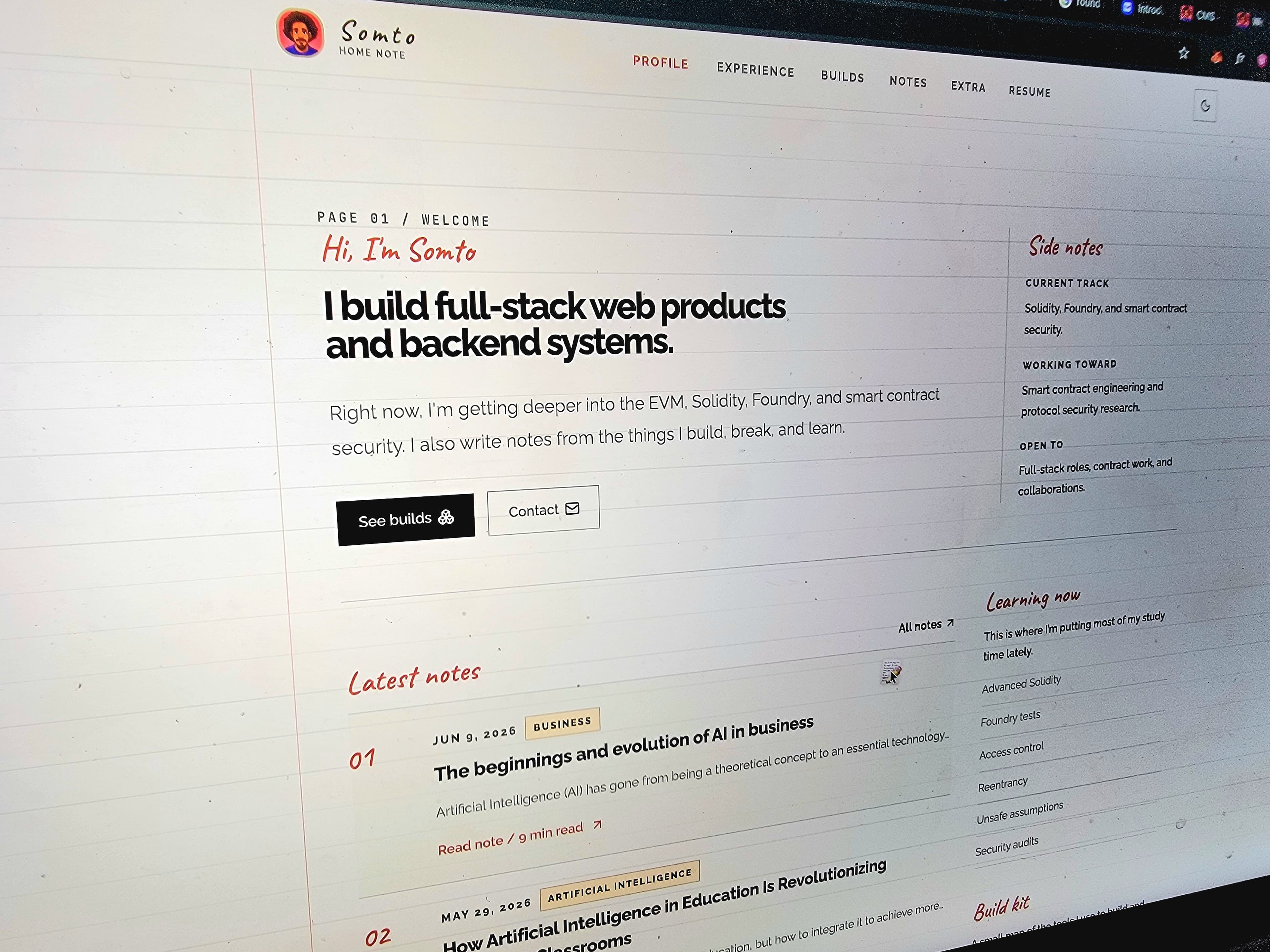
As a developer, this is the part where I admit something a bit embarrassing. I have spent a good amount of time building websites and products for other people, while my own website was just there, suffering like I had a beef with it.
Soon came and went.
Then another soon came.
Then soon became my full time colleague.
I needed a place to show my work, write notes, and keep track of things I am building and learning.
But I didn't want it to be just another “Hi, I’m a developer” page with a few links and a photo. There is nothing wrong with that, but I wanted something that felt more “me” and useful.
Basically, a small home on the internet.
Rent free, thankfully.
The part I like the most
The best part of the website is the CMS.
I know the design is nice. I like how the whole site feels like a notebook. That was very intentional. I wanted it to feel simple, calm, and personal. Not too shiny. Not too loud. Just a place where my work and notes can sit properly without looking like they are attending a tech conference against their will.
But the CMS is my favorite part.
I can easily update the page copies, add notes, and make changes without even opening the codebase every single time.
That alone gives me joy … choi!
Because before now, updating a portfolio could easily become one small spiritual battle.
You want to change one sentence, then suddenly you are opening your editor, checking components, changing files, pushing to GitHub, waiting for deployment, and wondering how your life got here.
Now, I can just log in, edit what I need, save it, and move on with my day like a responsible adult in an irresponsible country (Hehehe… No names were mentioned o).
Or at least something close to that.
The stack
I built the site with Next.js for both the frontend and backend.
The rest of the stack includes:
TypeScript
Tailwind CSS
MongoDB
MongoDB driver
Better Auth
Redis
AWS SDK
Tiptap
I used the MongoDB driver directly, which was new for me. Before this project, I had not really used it like this, so building the CMS gave me a good reason to get comfortable with it.
I also used Tiptap for the editor inside the CMS. This was my first time using it, and honestly, it is probably the best and easiest text editor framework I have used so far.
For authentication, I used Better Auth. That was also my first time using it in a real project. I used it to handle access to the admin side of the site, where I manage content.
I’ll write a separate article on how I used Better Auth with Next.js App Router, later.
The design
For the design, I wanted the site to feel like a notebook.
Not a literal notebook with spiral rings and dramatic paper textures, but something close in spirit. Quiet, structured, personal, and easy to move around.
I don't intend for every note to be a heavy engineering article. Some will be technical. Some may be about Solidity, web development, product building, or security. Others may just be random thoughts, tech news, ideas, or things I wouldn't want to forget.
I like the idea of having a quiet archive for whatever refuses to leave my mind.
A portfolio should show what you can do, but I think it can also show how you think. The notes section helps with that.
What I actually learned
I will not pretend this project gave me one big abstract life lesson.
There was no dramatic sunset moment where I looked at my laptop and discovered the meaning of software engineering.
The biggest personal lesson was simple: finishing something you started feels good.
Especially when you have postponed it for months because of procrastination, lack of interest, laziness, or the very popular developer excuse: “I’m still thinking about the design.” (This was my biggest challenge and excuse, ”…no design!”😂)
I had started and abandoned versions of this project before. This time, I actually followed through and finished it.
On the technical side, I also added a few things to my toolbox.
I used Better Auth and MongoDB driver for the first time.
I worked more with a custom CMS structure.
I connected different parts of the system in a way that now makes the site easier for me to manage.
So yes, I built a portfolio, but I also picked up new tools while doing it.
Need a website too?
Also, small shameless paragraph while we are here.
If you need a personal website, portfolio, landing page, or a small content managed website for your work or business, you can reach out to me.
I build websites that look good, feel clean, and are easy to manage after launch. Because honestly, a website should not require a full engineering meeting just to change one paragraph.
Anyway, I am happy I finally did this.
Not because it is perfect, but because it is no longer sitting rent-free in my head collecting dust.
That alone deserves a bottle of beer and like ₦5k suya.
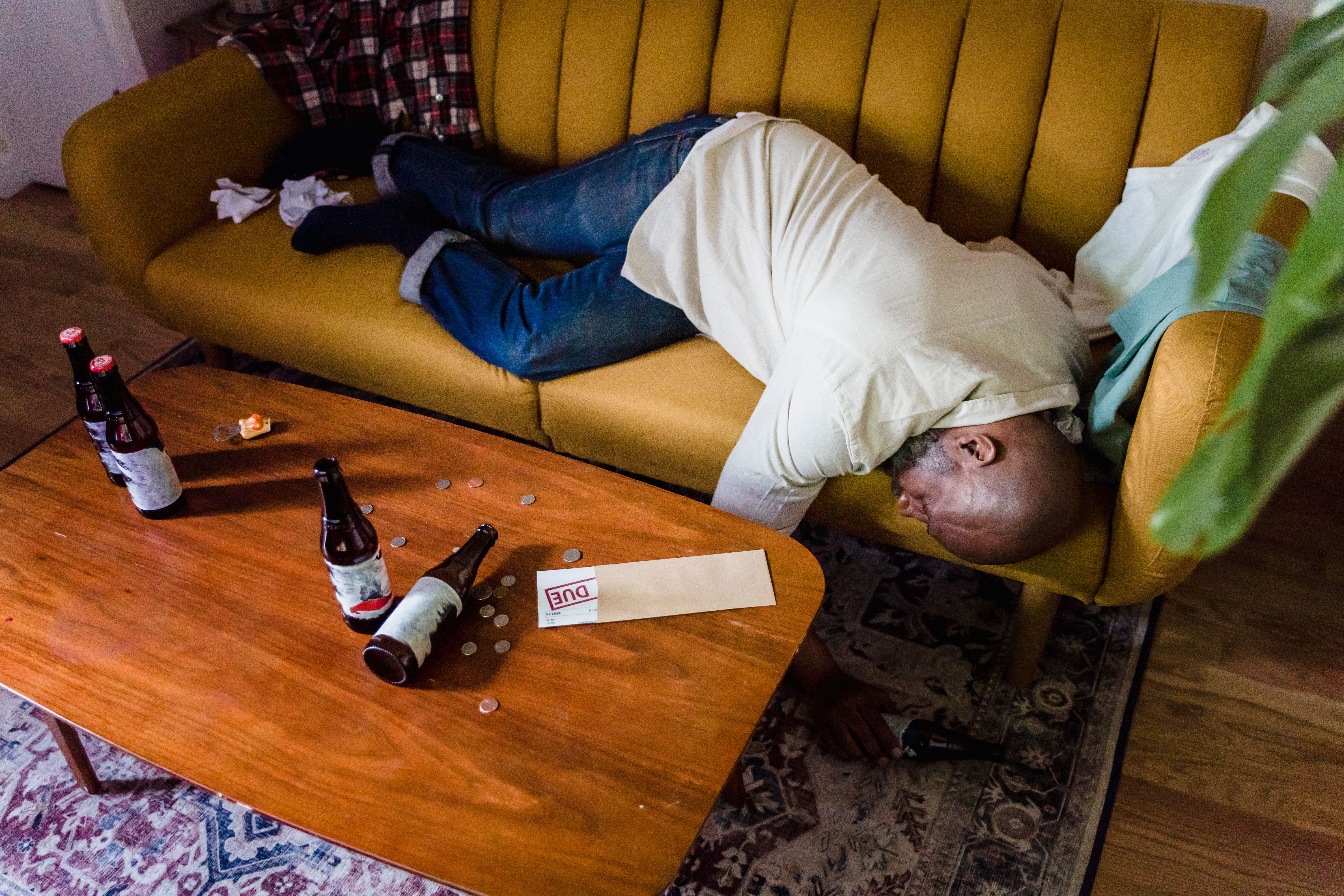
Now I’m done, I can finally rest and focus my time on other stuff.
And by “rest”, I obviously mean opening a new project, overthinking it, and pretending I will keep it small.
But really, finishing this website feels good. It is no longer one of those unfinished things sitting at the back of my mind, making small noise every few weeks.
Now I have a proper place to show my work, write notes, update my content, and keep things moving without needing to rebuild half the site every time I change my mind.